




Contents
- 1 Top 5 Beginner Guitars for 2026 (Australia edition)
- 1.1 How I chose a Guitar
- 1.1.1 Yamaha FG800 — Best all-round acoustic starter
- 1.1.2 Fender CD-60S (Pack) — Best easy-to-play dreadnought pack
- 1.1.3 Squier Affinity Stratocaster — Best beginner electric (classic Strat feel)
- 1.1.4 Ibanez GIO (GRX/RX70 series) — Best value for modern rock/metal beginners
- 1.1.5 Epiphone Les Paul Special-II — Best beginner for vintage/humbucker tone
- 1.2 Quick buying tips for Australian beginners
- 1.3 Final Thoughts on Beginner Guitars
- 1.4 The Ultimate Buying Guide to an Electric Guitar
- 1.5 A Guide to Buying an Acoustic Guitar
- 1.6 Four Ways to Learn to Play an Acoustic Guitar
- 1.1 How I chose a Guitar
Top 5 Beginner Guitars for 2026 (Australia edition)
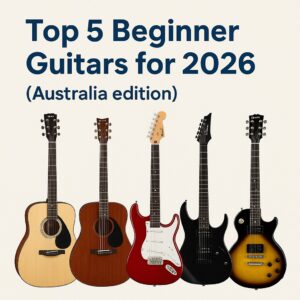 Getting started on guitar in 2026 has never been easier; manufacturers continue to improve playability and value at entry-level price points, and Australian retailers keep popular starter packs and well-known models in stock. Below are five guitars that consistently pop up in 2025–2026 buyer guides and Australian shops as the best options for beginners: solid tone, easy playability, wide availability in Australia, and good resale value if you decide to upgrade later.
How I chose a Guitar
-
-
- Playability: comfortable neck, low action out of the box (or easy to set up).
- Tone & build: realistic, useful tone for the price, often a solid top for acoustics.
- Value for money in Australia: common availability from Aussie dealers and sensible RRP/pack options.
- Longevity: a guitar you can keep playing for years or resell easily.
These factors are why the same few models reappear across 2025–2026 guides and Australian stores.
-
-
Yamaha FG800 — Best all-round acoustic starter
The Yamaha FG800 remains a go-to acoustic for beginners because it combines a solid spruce top, straightforward dreadnought tone and a comfortable neck at a price that suits most beginners. In side-by-side comparisons, it keeps up with much costlier guitars for projection and clarity, and many Australian shops sell FG800 starter packs that include a gig bag and tuner, excellent value for a first instrument. If you want a workhorse acoustic that sounds good unplugged and rewards practice, this is a top pick.
Pros: solid top, reliable build, widely available in Australia.
Things to check: try different body sizes if the dreadnought feels large.
-
Fender CD-60S (Pack) — Best easy-to-play dreadnought pack
If you prefer a classic Fender acoustic pack, the CD-60S (often sold as a starter pack with gig bag, strap and tuner) is a longtime favourite for beginners. The CD-60S has a solid top option in many packs, a familiar dreadnought voice, and is commonly bundled with accessories and online lesson trial subscriptions, handy for new players. Australian retailers frequently feature the CD-60S pack as an affordable entry point.
Pros: beginner packs include everything you need, warm Fender acoustic tone.
Tip: packs are a great value, but consider a professional setup if action feels high.
-
Squier Affinity Stratocaster — Best beginner electric (classic Strat feel)
For aspiring electric players, the Squier Affinity Stratocaster gives you classic Strat looks and a comfortable neck at a beginner price. The Affinity Series has been widely recommended across Australian guitar review sites and local retailers for offering authentic Fender-style playability without the Fender price tag. It’s also a model that students can easily pair with a small practice amp and still get a wide variety of tones.
Pros: widely available, comfortable C-shaped neck, versatile tones.
Things to check: try HSS vs SSS pickup layouts depending on the music you plan to play.
-
Ibanez GIO (GRX/RX70 series) — Best value for modern rock/metal beginners
If you want an electric focused on playability for riffs and faster playing styles, the Ibanez GIO line (models like the GRX70 / RX70) is hard to beat at this price. Ibanez consistently offers slim neck profiles and solid hardware in their entry range, ideal for students who favour shredding, rock or heavier tones. Australian reviews and retailers praise the GRX/RX70 for looking, playing and sounding above its price point.
Pros: thin fast neck, reliable manufacturing checks, good pickups for the money.
Tip: pair with a small modelling or practice amp to explore tones without spending on pedals.
-
Epiphone Les Paul Special-II — Best beginner for vintage/humbucker tone
If you’re after a thicker, humbucker-rich tone (think blues, classic rock, hard rock), the Epiphone Les Paul Special-II is a classic budget Les Paul alternative. It gives beginners a Les Paul-style feel and weight, plus a humbucking pickup sound that many players love. Australian dealers often stock this model at a competitive price, making it a sensible choice for players who want that Les Paul voice without the Gibson price.
Pros: Les Paul tone and feel at entry price, solid value.
Caveat: Some factory setups can be rough; a one-time professional setup is a worthwhile investment.
Quick buying tips for Australian beginners
-
-
- Try before you buy — if possible, visit a local music shop (JB Hi-Fi, Manny’s, Belfield, Riff & Licks, and independent luthiers often have stock). Retailers in Australia frequently run pack promotions and lesson trials.
- Consider a starter pack — acoustic packs include a bag, tuner, picks and sometimes online lessons; great if you’re unsure.
- Budget for a setup — many inexpensive guitars benefit greatly from a professional setup (lower action, intonation).
- Check authorised Aussie dealers — ensures warranty support and easier returns.
- Used market — Gumtree, Facebook Marketplace and local pawn shops can yield bargains; always test before buying.
-
Final Thoughts on Beginner Guitars
In 2026, the entry-level guitar market in Australia offers more solid, playable options than ever. Whether you want the classic acoustic feel of the Yamaha FG800, the pack convenience of the Fender CD-60S, or the electric versatility of Squier and Ibanez, there’s a reliable, affordable guitar to get you started. Pick a model that fits your musical goals, try a few in person, and budget for a one-time setup. You’ll be amazed at how much better a small adjustment can make a beginner instrument feel.