




Contents
Different Types of Banjos and Their Characteristics
The different types of banjos, each with its own unique characteristics and sound. For example, the five-string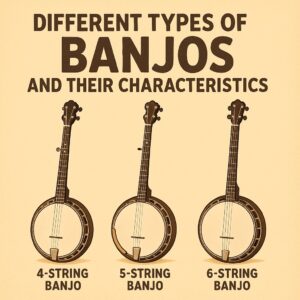 banjo is easily recognised by its four long strings and a shorter fifth string known as the drone string, which creates the instrument’s signature bright and resonant tone. This type is particularly popular in bluegrass and folk music and can be found in both open-back and resonator styles, depending on the desired volume and playing technique. On the other hand, the tenor banjo features a shorter neck with four strings and is well-suited for traditional jazz, Irish folk, and Dixieland, offering a punchy and lively sound. Each variety of banjo is distinguished not only by its physical design but also by its preferred tuning and the genres in which it shines, making the banjo a versatile instrument with a broad musical appeal.
Here’s a rundown of the most common types of banjos and what sets them apart:
- Five-String Banjo
-
-
- Description: The most common type of banjo, with four long strings and one shorter fifth string (the drone string), which starts halfway up the neck.
- Sound: Bright and resonant, often used in bluegrass and folk music.
- Tuning: Standard tuning is G-D-G-B-D.
- Variations: Open-back (typically used for clawhammer and old-time music) and resonator (used in bluegrass for a louder sound).
-
- Tenor Banjo
-
-
- Description: A four-string banjo with a shorter neck, typically 17 or 19 frets.
- Sound: Bright and punchy, commonly used in traditional jazz, Irish folk music, and Dixieland.
- Tuning: Standard tuning is C-G-D-A or G-D-A-E (same as a mandolin or violin).
-
- Plectrum Banjo
-
-
- Description: Like the tenor banjo but with a longer neck and no shorter fifth string.
- Sound: Bright and loud, ideal for jazz and traditional music.
- Tuning: Standard tuning is C-G-B-D.
-
- Six-String Banjo (Banjo-Guitar)
-
-
- Description: A banjo with six strings, tuned like a guitar.
- Sound: Combines the percussive sound of a banjo with the familiarity of a guitar.
- Tuning: Standard tuning is E-A-D-G-B-E (same as a guitar).
-
- Banjo Ukulele (Banjolele)
-
-
- Description: A small, four-string instrument that combines the body of a banjo with the neck and tuning of a ukulele.
- Sound: Bright and punchy, with a unique blend of banjo twang and ukulele sweetness.
- Tuning: Standard tuning is G-C-E-A (same as a ukulele).
-
- Bass Banjo
-
-
- Description: A larger banjo designed to play bass lines, typically with four thick strings.
- Sound: Deep and resonant, providing a bass foundation in banjo ensembles or bands.
- Tuning: Standard tuning is E-A-D-G (same as a bass guitar).
-
- Cello Banjo
-
-
- Description: A larger, lower-pitched banjo with thicker strings, similar in range to a cello.
- Sound: Rich and warm, often used for unique tonal textures in ensembles.
- Tuning: Standard tuning is C-G-D-A.
-
- Electric Banjo
-
-
- Description: A banjo equipped with pickups for amplification, like an electric guitar.
- Sound: Versatile, capable of producing both traditional banjo sounds and electric effects.
- Usage: Popular in modern genres and experimental music.
-
Each type of banjo offers a unique sound and playing experience, making the instrument incredibly versatile. Whether you’re into bluegrass, jazz, or modern rock, there’s a banjo out there to suit your style.
Learning to play the banjo
Learning to play the banjo can be a fun and rewarding experience. Here’s a step-by-step guide to get you started:
Choosing the Right Banjo
-
-
- Type: Decide on the type of banjo you want to learn (e.g., five-string, tenor, plectrum). Most beginners start with a five-string banjo.
- Budget: Choose a banjo that fits your budget. Entry-level banjos are great for beginners and can be found at music stores or online.
-
- Getting the Essentials
-
-
- Tuner: A chromatic tuner is essential for keeping your banjo in tune.
- Picks: For bluegrass styles, you’ll need finger picks and a thumb pick. Clawhammer players usually use their bare fingers.
- Strap: A good strap helps you support the banjo while playing.
- Metronome: Helps you keep time and develop a steady rhythm.
-
- Learning Basic Techniques
-
-
- Tuning: Learn how to tune your banjo. Standard tuning for a five-string banjo is G-D-G-B-D.
- Chords: Start with basic chords like G, C, and D. Practice changing between them smoothly.
- Strumming and Picking: Learn basic strumming patterns and fingerpicking techniques. For bluegrass, learn the three-finger picking style. For old-time music, learn the clawhammer technique.
-
- Practice Regularly
-
-
- Daily Practice: Set aside time each day to practice. Even 15-20 minutes a day can make a big difference.
- Warm-Up Exercises: Start each practice session with finger and hand exercises to improve dexterity and strength.
-
- Using Learning Resources
-
-
- Online Tutorials: Websites like YouTube, Banjo Hangout, and ArtistWorks offer free and paid lessons.
- Books: Consider getting beginner banjo books like “You Can Teach Yourself Banjo” by Janet Davis or “Bluegrass Banjo” by Pete Wernick.
- Apps: Apps like Yousician and Ultimate Guitar can help learn songs and techniques.
-
- Playing Songs
-
-
- Simple Tunes: Start with simple songs like “Cripple Creek,” “Boil Them Cabbage Down,” and “Banjo in the Hollow.”
- Backing Tracks: Play along with backing tracks to get used to playing with other instruments.
-
- Joining a Community
-
-
- Banjo Groups: Join online forums and local banjo groups to connect with other learners and experienced players.
- Jamming: Participate in jam sessions to improve your skills and have fun with other musicians.
-
- Setting Goals
-
-
- Short-Term: Set achievable short-term goals, like learning a new song or mastering a chord progression.
- Long-Term: Set long-term goals, such as performing at a local open mic or playing in a band.
-
- Enjoy the Journey
-
-
- Patience: Learning an instrument takes time and dedication. Be patient with yourself and enjoy the process.
- Have Fun: Remember to have fun and enjoy making music. Celebrate your progress and milestones.
-
Learning to play the banjo can open a world of musical possibilities. Whether you’re interested in bluegrass, old-time, jazz, or even rock, the banjo offers a unique and versatile sound.
Conclusion: The Enduring Legacy of the Banjo
The banjo’s journey from its African origins to its prominent place in American music is a testament to its resilience and versatility. This instrument, with its distinctive twang and vibrant sound, has made significant cultural contributions and evolved through the centuries.